Hovermenü - EN

    Go2Change

    Go2CHANGE

    COST is an EU funding program that supports the networking of scientific and technological research activities in Europe. The GO2CHANGE project addresses the impacts of climate change on World Heritage sites and develops new approaches to climate mitigation and adaptation in historic settings. The project aims to bridge the gap between overarching climate goals and local implementation and to strengthen World Heritage as a strategic resource for a just and resilient climate transition.

    For more information: Go2Change.eu
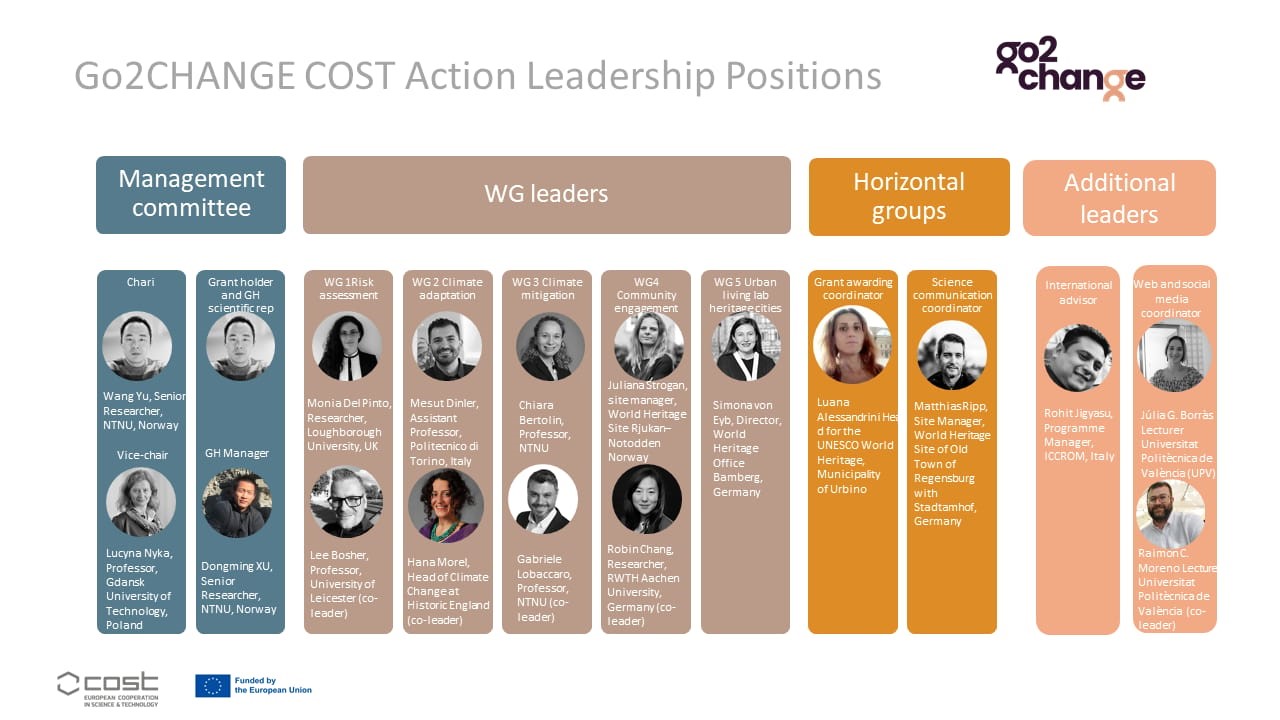
    go2change_team.jpg

    The project focuses on how to develop locally adaptable strategies for climate mitigation and adaptation that integrate World Heritage conservation with the requirements of urban planning, environmental management, and disaster risk reduction. Go2CHANGE addresses four closely interlinked thematic areas:

    1. Climate Risk Assessment -  Methods to identify potential losses of heritage values (authenticity, integrity) under current/projected hazards; delivers a toolbox for site  and area based risk assessment.
    2. Climate Adaptation - Practical guidance to integrate heritage adaptation plans into local climate risk systems, removing administrative barriers and fostering inter departmental cooperation and local risk networks.
    3. Climate Mitigation - Measures and pathways to reduce GHG emissions in heritage sites without compromising values, supporting low carbon operations.
    4. Community Engagement and Capacity Building - Co creation with residents and stakeholders, leveraging local wisdom and traditional knowledge to strengthen societal readiness, skills, and social cohesion.
    5. Urban Living Lab (ULL) Heritage Cities - Experimental city labs where strategies are tested, refined for transferability, and fed back into all WGs with local stakeholders.

    A central tool of the project is the Urban Living Labs in four European cities. In these real-world laboratories, practical, people-centered climate strategies are developed, tested, and evaluated in collaboration with local governments, heritage conservation organizations, civil society, NGOs, and researchers.

    In Bamberg, the Bamberg World Heritage Center (ZWB) is a project partner and is responsible for the “Urban Living Labs” work package. The project results directly support the further development of the management plan for the UNESCO World Heritage Site “Old Town of Bamberg.” Local stakeholders are invited to contribute their knowledge, perspectives, and experiences to the collaborative working process.

    The project partners come from Norway, the UK, Italy, Spain, Poland, and Germany.

    URBAN LIVING LAB IN BAMBERG

    In its first year, the Urban Living Lab (ULL) is being hosted by the City of Bamberg. The thematic focus is on:
    • The implementation and integration of climate protection and climate adaptation measures into the World Heritage Management Plan for the “Old Town of Bamberg.”
    • Improving communication of climate protection measures to stakeholders and the general public.
    The Bamberg ULL contributes to the overarching goals of Go2CHANGE through the following local objectives:
    • Identifying and assessing climate risks in Bamberg and analyzing the vulnerability of World Heritage attributes,
    • Integrating climate adaptation and climate risk management into existing World Heritage management structures,
    • Identifying potential climate change mitigation measures for the World Heritage site in Bamberg.
    • Strengthening community participation and capacity building by translating local knowledge and practices into concrete measures for climate resilience,
    • Developing transferable insights and best practices for the Go2CHANGE network as well as for other management and planning tools.
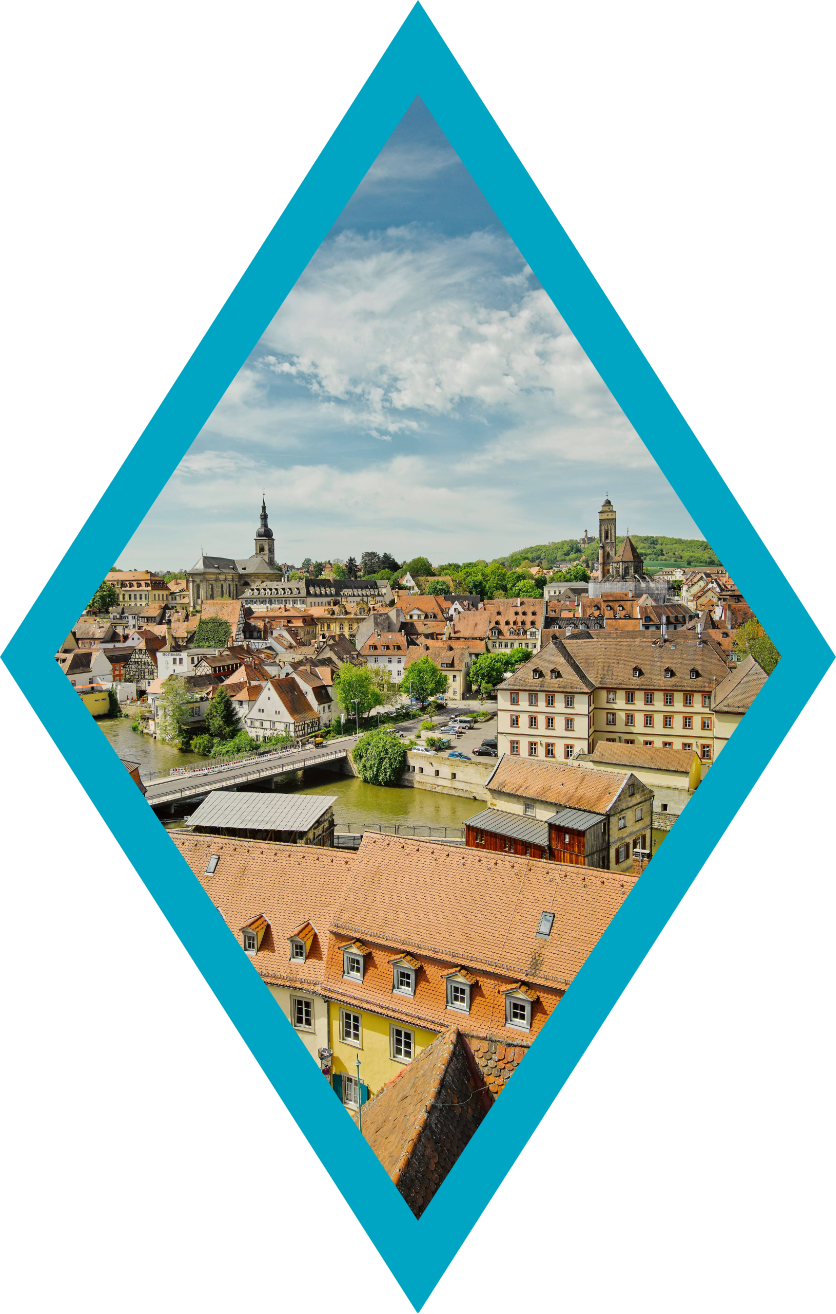
    design-ohne-titel.png

    COST ACTIONS AND KEY DATES IN BAMBERG

    The following activities will be carried out as part of the Bamberg ULL:
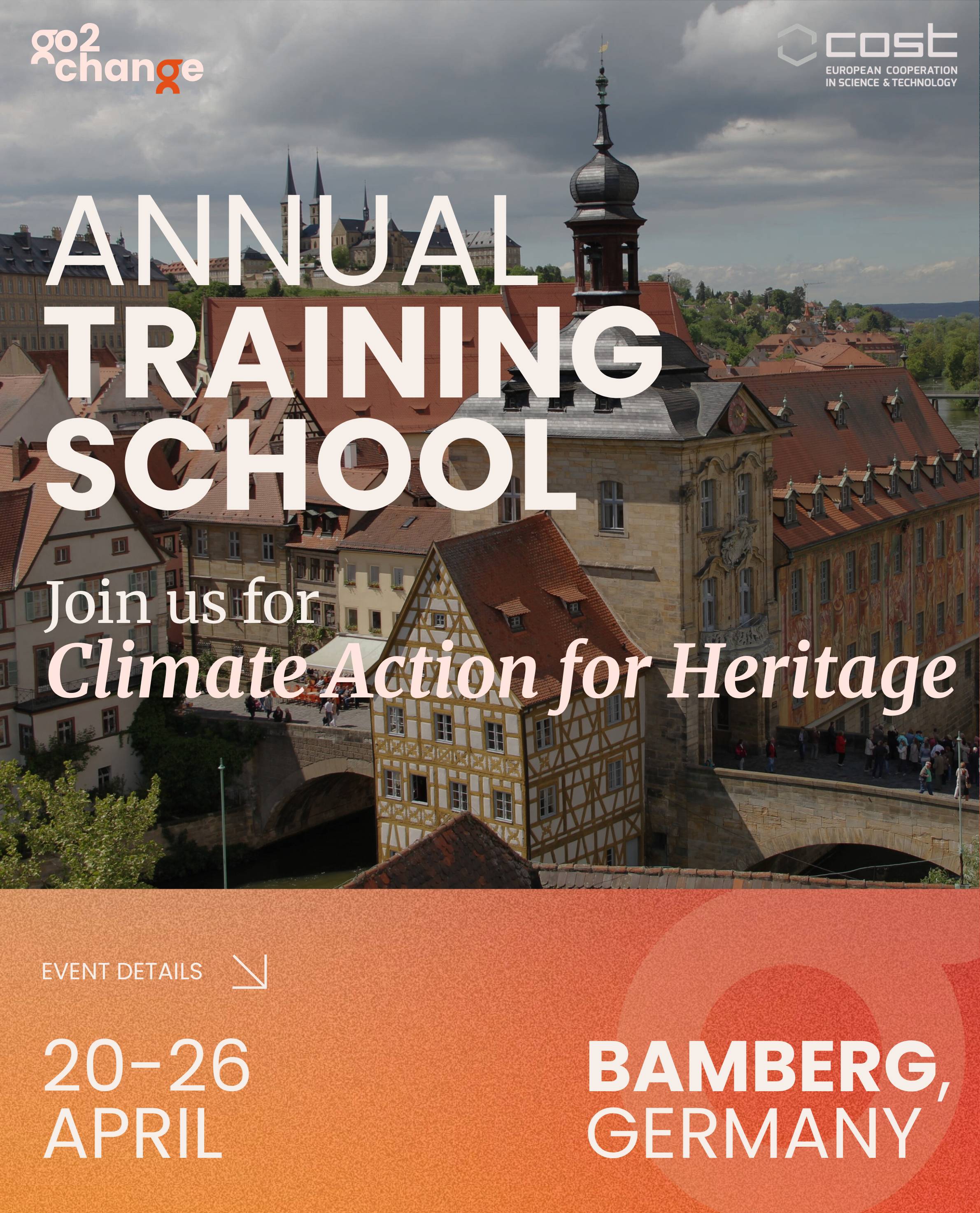
    • Training School: April 26, 2026
    • Technical Workshop: June – July 1, 2026
    • Dissemination Event: October 2026

    The Bamberg ULL follows this structure:
    • Preparation and scoping (overview of the state of research on relevant methods and best practices, as well as analysis and assessment of the local context)
    • Development of initial climate mitigation and adaptation solutions for the World Heritage site in Bamberg
    • Conducting a training school with a focus on co-creation, testing, and validation
    • Expert workshop to fine-tune climate protection and climate adaptation solutions for the World Heritage site in Bamberg
    • Evaluation of all results and final development of an operational framework for climate protection and climate adaptation in the context of World Heritage sites
    • Finally, measures for disseminating the results and fostering networking.

    Training School in Bamberg

    Purpose:
    • to test, co create and validate climate solutions in heritage contexts within the Bamberg ULL.

    Key topics (selection):
    • climate risk and vulnerability assessment
    • adaptation (risk informed management, monitoring & indicators, digital tools and data, nature based solutions, just and equitable adaptation)
    • mitigation (energy efficiency, renewables integration, life cycle assessment for heritage restoration, urban system transitions)
    • locally led governance
    • community involvement and capacity building.

    Learning format:
    • targeted knowledge inputs
    • participatory/experimental urban studios
    • fieldwork
    • engagement with local stakeholders
    • structured feedback and reflection.

    Expected outputs: 
    • site specific climate solutions and operational pathways for the Hill, Island and Gardeners’ districts
    • contributions to WG white papers and inputs for the expert workshop planned for June–July.
    go2change_training-school_poster_vertical_klein.jpg